
For sellers, that can create urgency, competition and a clearer path toward a completed sale. For buyers, it creates a defined opportunity to participate and decide what an item or property is worth to them.
How Does an Auction Work?
Before an auction takes place, the auction company prepares the property or assets for sale, develops the auction strategy, markets the opportunity to potential buyers and explains how bidding will work.
Buyers may bid in person, online, by mobile device or through several methods at once. Every auction can have different requirements, so buyers should always review the terms and conditions and ask questions before bidding.
Why Sell at Auction?
For the right property or situation, auction can be a strategic way to create a marketplace and move toward a sale on a defined schedule.
Competition. Interested buyers have an opportunity to compete for the same asset.
A defined timeline. Sellers generally know when the auction will take place and when a decision will be made.
Established terms. Important conditions of the sale are communicated before bidding begins.
Purposeful marketing. Auction professionals build campaigns designed to identify prospective buyers, create awareness and generate interest.
Momentum. A known sale date gives buyers a reason to evaluate the opportunity and be prepared to act.
Why Buy at Auction?
You don’t need years of auction experience to participate. A professional auction company should make the process and terms clear before you bid.
You set your limit. You decide what the property or item is worth to you.
You can follow the bidding. Depending on the format, buyers can see how bidding progresses.
You know the schedule. Auctions have a defined bidding period or sale date.
You may find something uncommon. Many unique properties, collections and specialty assets are sold through auction.
The auction begins long before the first bid.
One of the most important parts of a successful auction happens before the public ever sees the bidding screen or hears an auctioneer call for a bid: marketing.
Auction professionals work to understand what is being sold, who is most likely to want it and how to reach those buyers. Depending on the property or assets, that preparation may begin weeks or months before the auction.
They may research buyer markets, build prospect lists, prepare professional photography and video, develop catalogs and property information, create digital campaigns, send targeted email, promote through social media, place traditional advertising, conduct direct outreach and use industry-specific databases and professional networks.
The goal is not simply to announce that something is for sale. It is to build a marketplace around the asset, reach prospective buyers and give them the information and time they need to be ready to compete.
Auctions are used for more than most people realize.
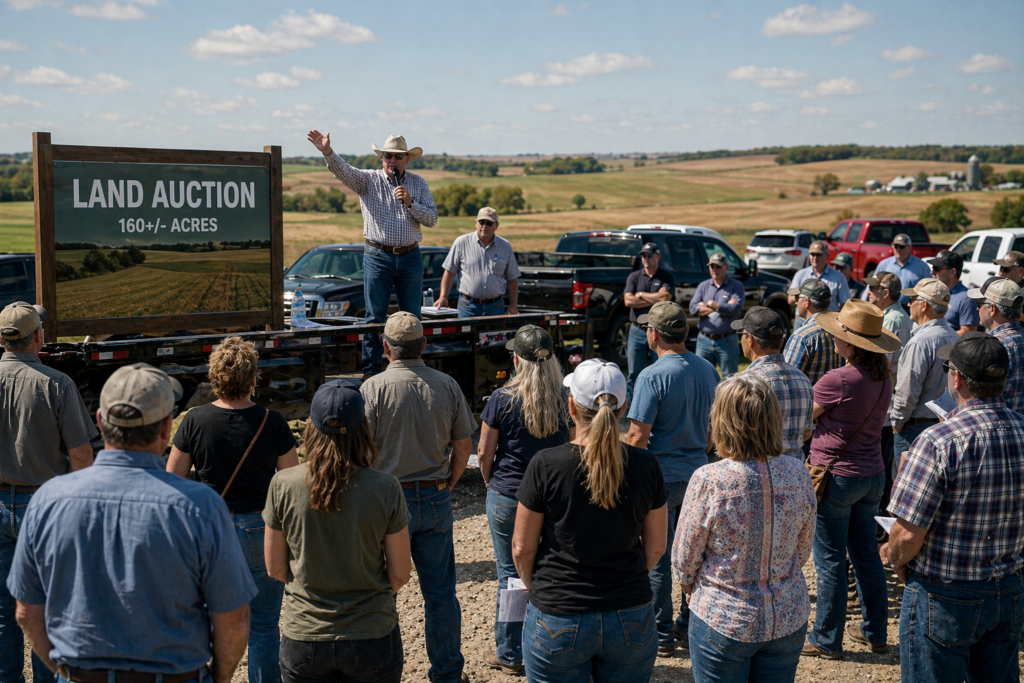
Auctions can be used to sell a single asset, a collection, an estate or an entire group of business assets.
Real Estate — Homes, commercial property and land
Agriculture — Machinery, livestock, equipment and farmland
Fine Art & Collectibles — Artwork, antiques, collections and specialty items
Automotive — Cars, specialty vehicles and commercial vehicles
Business Assets — Equipment, machinery, inventory and commercial property
Benefit Auctions — Professional fundraising events for nonprofits, schools, foundations and community organizations

A Successful Auction Takes a Team
Depending on the type and size of the sale, an auction may involve several professionals working together behind the scenes.
Auctioneers conduct bidding and manage the pace of a live sale.
Ringmen help identify and relay bids during live auctions.
Clerks maintain bidding and transaction records.
Marketing professionals build campaigns, catalogs, listings, advertising and buyer outreach.
Technology professionals manage online bidding, livestreaming and remote participation.
Subject-matter experts bring specialized knowledge about particular types of property or assets.
Client-service and logistics teams coordinate contracts, cataloging, staging, pickup and other details.
The Value of Choosing an NAA Member
Backed by Education, Professional Standards and a Code of Ethics
When you’re trusting someone with a home, land, business assets, personal property, a collection or an important fundraising event, choosing the right professional matters.
Members of the National Auction Association are connected to a national professional organization dedicated to advancing the auction industry through education, professional development and ethical practice.
NAA members have access to continuing education, industry information, professional networks and specialized learning designed to help them stay current as auction methods, technology, marketing and buyer behavior continue to evolve. Many members also pursue advanced professional designations in specific areas of auction practice.
The NAA Advantage
Professional education. Access to auction-specific education, training and professional development.
Industry knowledge. Connections to evolving best practices, technology, market information and professional expertise.
Ethical standards. Membership in a professional association with an established Code of Ethics.
Specialized expertise. Many NAA members pursue professional designations and advanced education within specific areas of auction practice.
Reaching the Right Audience
Strong auction professionals understand that the right buyers rarely appear by accident. They develop a marketing strategy around the property, assets and audience they need to reach.
Digital campaigns targeted to prospective buyers
Email and direct outreach to buyers and established networks
Social media and online advertising built around the specific sale
Photography, video and catalogs that help buyers understand the opportunity
Online and livestream technology that can expand participation beyond the local market
An NAA member is more than someone who can call bids. You’re choosing a professional with access to education, industry resources and a national professional community designed to support modern auction practice.
The right professional matters.
When speaking with an auction professional, ask about their experience with what you are selling, how they would market the auction, how fees work, what services are included and what you should expect from beginning to end.
A good auction professional should be able to explain the process clearly, answer your questions and help you understand the strategy behind the sale before you make a decision.
Ready to Talk With an Auction Professional?
You don’t need to know everything about auctions before making the first call. NAA can help you connect with an auction professional and start asking the right questions.